Digital twin manufacturing examples: Unilever's 40 new twins and lessons from Türkiye
Unilever is taking AI-enabled digital twins tested in five factories to more than 40 new twins with Accenture. Real digital twin manufacturing examples, the metrics behind them, and cases from Arçelik, Tekkan and Ford Otosan in Türkiye.
For years the digital twin was mostly an impressive 3D model on a trade show stand. What Unilever told Supply Chain Dive on October 15, 2026 brings it down to factory metrics: as the company takes lessons from five plants to roughly 40 sites with Accenture, its first lesson is "set measurable goals first" [1]. This article collects digital twin manufacturing examples with the results Unilever has shared, compares them with verified cases from Türkiye, and lists the questions a plant manager should ask before starting.
What is a digital twin in manufacturing?
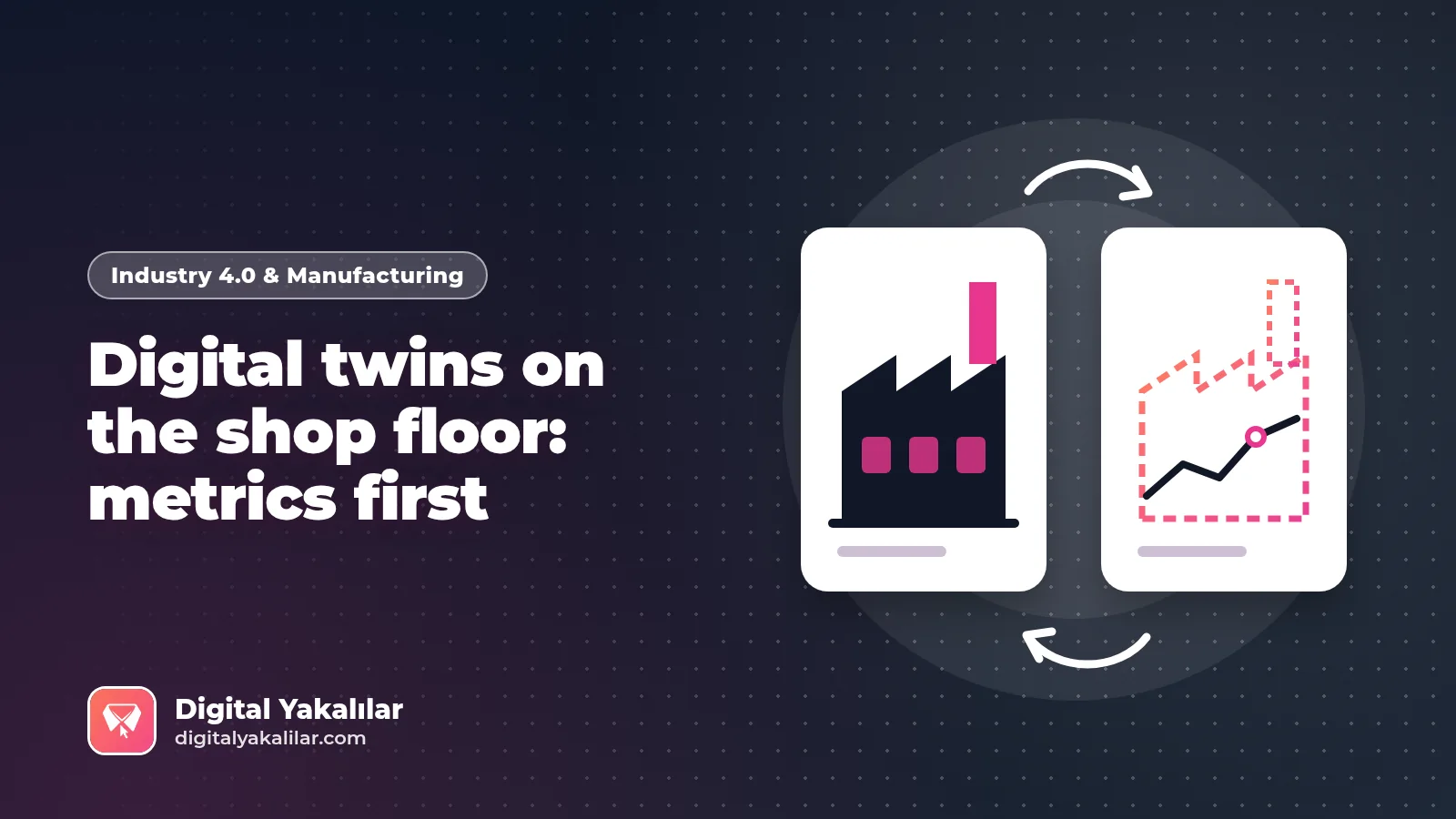
In Unilever's definition, digital twins are virtual models of factory equipment and production lines that use live data from physical systems on the shop floor to monitor and predict how machines and processes perform [2]. Unilever combines them with AI-enabled insights and agentic capabilities to spot issues sooner and simulate scenarios faster [2].
In short, a digital twin is not a visualization project. It is an operational tool where sensor data, a process model and decision support meet.
What Unilever announced
In June 2026, Unilever and Accenture said they would build more than 40 new digital twins over the next 18 months and turn them into a scalable blueprint for global rollout [2]. In the October interview, Vicky Cuthbert, chief product supply chain officer for Unilever's personal care business, said the expansion builds on five manufacturing sites: one each in the U.S., Poland and Vietnam, and two in India [1].
Accenture's role is to deploy analytics and AI agents that predict maintenance needs, improve performance and help teams act faster. According to the press release, as the system learns and employees gain confidence in its accuracy, it can take on certain adjustments automatically, with human oversight [2].
Results from five factories (company data)
| Site | Product | Reported result |
|---|---|---|
| Raeford, U.S. | Deodorant sticks | Predicts 95% of process flow restrictions; 20% less waste, 10% more capacity [2] |
| Poznań, Poland | Mayonnaise | Viscosity variation stabilized; minor stoppages down up to 20%, waste down nearly 30% [2] |
| Gandhidham, India | Dove soap | 30% fewer quality defects over four years (measured at distribution centers) [2] |
| Haldia, India | Powder detergent | Energy twin; tangible thermal energy reduction over two years (no percentage given) [2] |
| Cu Chi, Vietnam | Liquid detergent | 1-2% savings in premium ingredients through optimized dosing [2] |
These numbers come from the company's own release, with no independent audit detail. Still, the chosen metrics (waste, capacity, defects, energy, raw materials) are KPIs a plant already tracks, which makes this a good example of tying a twin to business results.
Four lessons from Unilever
- Define the problem and the metric first. Cuthbert said that in the early days they were "probably not clear enough" about driving a benefit they could measure; making that clear for all stakeholders up front is now "incredibly important" [1].
- Don't underestimate the people side. Unilever built a program called DigiEdge that develops employees' digital skills in planning and factory operations with a gamified format [1].
- Grant autonomy step by step. Today the twins suggest corrections that require human approval; agents can sometimes act autonomously on low-risk processes [1].
- Pick sites by readiness. More technically advanced factories are chosen because they have the technology infrastructure, cybersecurity and data-gathering sensors needed [1].
The promise Cuthbert values most is predictive maintenance based on sensor data: knowing when equipment will need service to manage downtime and spare parts [1].
Digital twin manufacturing examples from Türkiye
| Company | Process | Approach | Reported result |
|---|---|---|---|
| Arçelik + Simularge | Refrigerator inner-body thermoforming | Engineering formulas + simulation + real-time sensor data; deployed in one plant | Better quality, lower scrap and plastic use; initial savings of more than $2 million a year [3] |
| Tekkan Plastic (Kocaeli) | Plastic injection molding | InjecTwin: real-time machine data, quality prediction, operator guidance | Goal: higher OEE and good-part output (Change2Twin program) [4] |
| Ford Otosan + Haskoning | Design of a new electric commercial vehicle plant | Predictive simulation with Witness; short-, medium- and long-term scenarios | 3% savings on the proposed facility; capacity plan for 12 months after opening [5] |
In the Arçelik case the thermoforming process consumes more than 20,000 tons of plastic a year, so even small efficiency gains become a large cost and environmental item [3]. The lesson mirrors Unilever's: IoT and PLC infrastructure plus engineering capability were crucial to the twin's success [3].
The Ford Otosan example shows a twin can create value before the investment decision, not only in a running plant [5]. We covered the company's AI-supported energy management in Kocaeli in our Ford Otosan MEGA AI APEM article.
What it means for manufacturers in Türkiye
According to TÜİK's 2026 data, the share of enterprises using AI in Türkiye rose from 7.5% to 14% in a year; it reaches 37.1% among enterprises with 250 or more employees and 12.8% among those with 10-49 [6]. Data-heavy applications like twins are still concentrated in larger manufacturers.
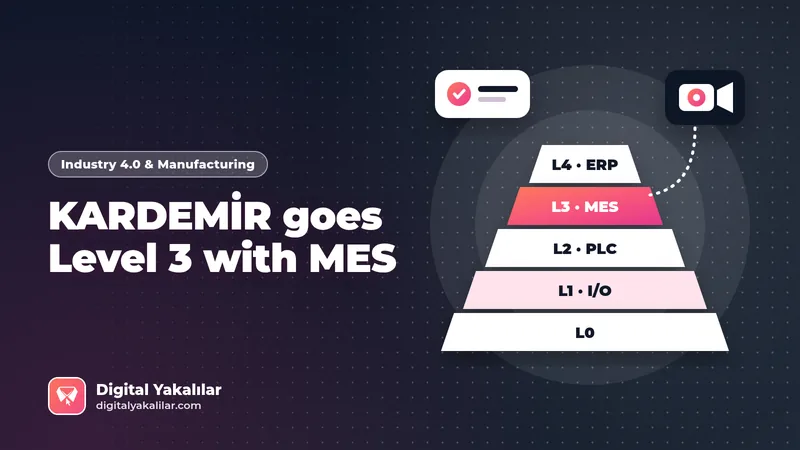
For SMEs, the right first step is usually not the twin itself but the data foundation: which machine produces which data, and how does it flow between MES and ERP? For that, see KARDEMİR's ISA-95-based Level 3 project, and to measure digital maturity, our TÜBİTAK DDX+ guide.
Checklist: Before starting a digital twin project
- Is there one written problem and KPI for the twin (waste, stoppages, defects, energy, materials)?
- Has today's value of that KPI (baseline) been measured?
- Does the line have enough sensor and PLC data, and does it flow reliably?
- Are cybersecurity controls defined for the OT network and data flow?
- Who approves the twin's recommendations, and which low-risk adjustments may run automatically?
- Is there a training plan for operators and engineers?
- Is the blueprint documented so it can move to other lines or plants?
- Have you considered simulation before investing (new line, new plant)?
Frequently asked questions
What does a digital twin do in manufacturing?
As a virtual model of equipment and lines, it uses live data to monitor and predict performance [2]. In Unilever's case, improvements were reported in waste, capacity, quality defects, energy and raw material use [2].
How many digital twins will Unilever build?
Unilever and Accenture plan to build more than 40 new digital twins over 18 months [2].
Is a digital twin the same as predictive maintenance?
No. Predictive maintenance is one of the most important use cases of a digital twin. Unilever's Vicky Cuthbert sees predicting when equipment will need maintenance from sensor data as the most valuable promise [1].
Are there digital twin examples in Türkiye?
Yes. Arçelik's thermoforming twin with Simularge delivered initial savings of more than $2 million a year [3], Tekkan Plastic developed InjecTwin for injection molding [4], and Ford Otosan validated a new plant design with predictive simulation [5].
Do digital twins apply decisions automatically?
At Unilever, suggested corrections currently require human approval; agents can act autonomously only on some low-risk processes [1].
References
- Supply Chain Dive, Antone Gonsalves, "Unilever puts business results first in factory digital twin rollout", October 15, 2026. https://www.supplychaindive.com/news/unilever-puts-business-results-first-in-factory-digital-twin-rollout/833011/ (Accessed: October 19, 2026)
- Unilever, "Unilever scales digital twins across global manufacturing network with Accenture", June 16, 2026. https://www.unilever.com/news/press-and-media/press-releases/2026/unilever-scales-digital-twins-across-global-manufacturing-network-with-accenture/ (Accessed: October 19, 2026)
- Istanbul Technical University research portal, Nihan Yıldırım et al., "Digitalization of Manufacturing Processes with Startup Collaboration: Arçelik Developing a Digital Twin with Simularge" (book chapter). https://research.itu.edu.tr/en/publications/digitalization-of-manufacturing-processes-with-startup-collaborat/ (Accessed: October 19, 2026)
- Change2Twin Project, "Digital Twin in plastic injection manufacturing - meet Tekkan Plastic!", July 1, 2024. https://www.change2twin.eu/digital-twin-in-plastic-injection-manufacturing-meet-tekkan-plastic/ (Accessed: October 19, 2026)
- Haskoning, "Ford Otosan achieves 3% savings using predictive digital twins". https://www.haskoning.com/en/projects/ford-otosan-and-predictive-digital-twins (Accessed: October 19, 2026)
- Anadolu Agency, Mertkan Oruç, "Türkiye yapay zekayı en çok bilişimde, en az inşaatta kullanıyor" (TÜİK AI Statistics 2026, in Turkish), October 3, 2026. https://www.aa.com.tr/tr/bilim-teknoloji/turkiye-yapay-zekayi-en-cok-bilisimde-en-az-insaatta-kullaniyor/4076782 (Accessed: October 19, 2026)