How to measure training effectiveness when only 41% of employees use what they learned
A TalentLMS survey of 1,500 employees found only 41% consistently use a new way of working after training. How to measure training effectiveness with the Kirkpatrick levels, a metrics table and a 90-day checklist.
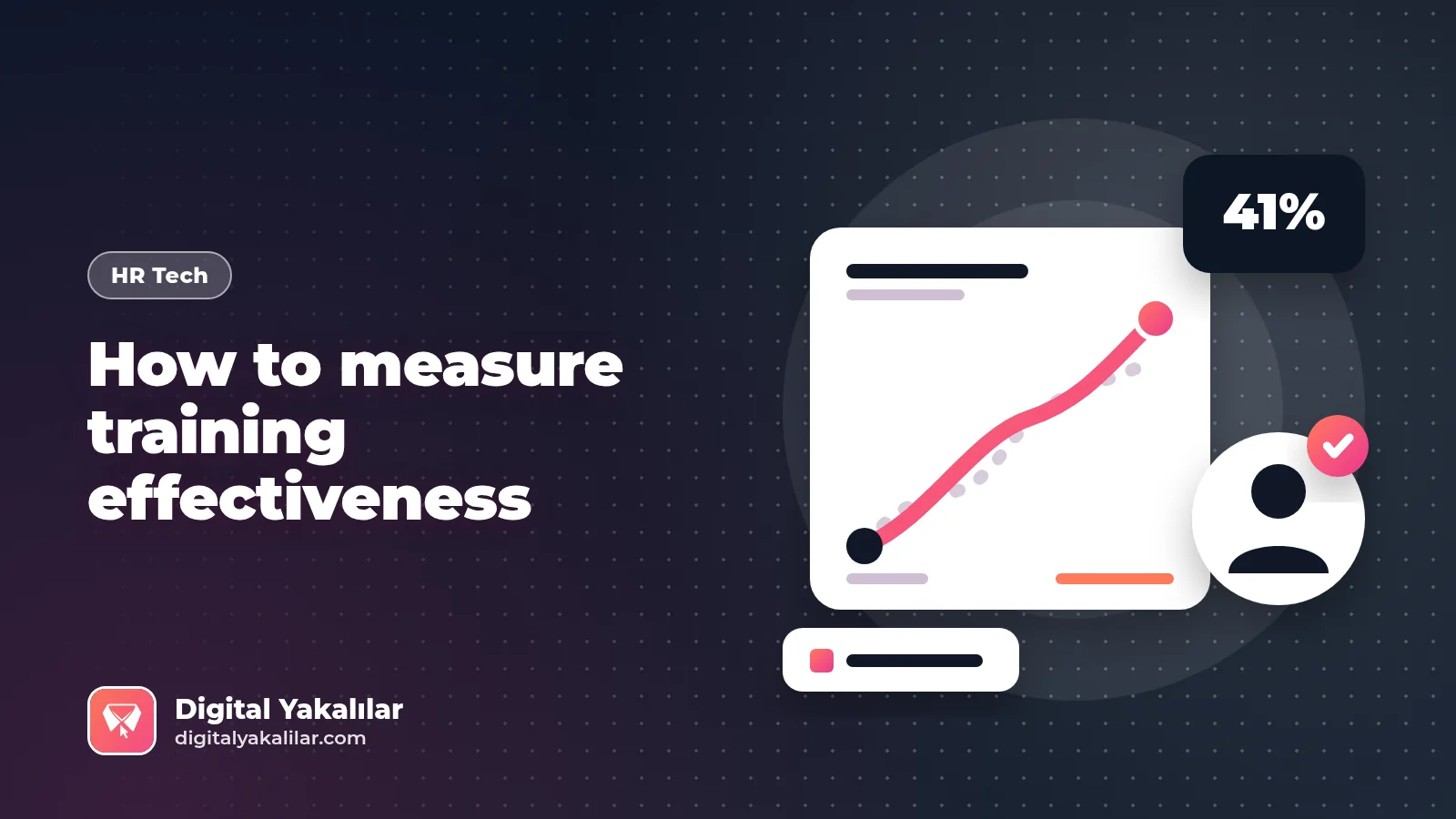
The course is finished, the attendance sheet is complete and the satisfaction survey scored 4.6 out of 5. But three months later, are people actually working the new way? Research published by TalentLMS on October 27, 2026 suggests the honest answer is often "partly": only 41% of employees consistently use a new way of working after they have been trained on it [1][2]. This guide shows how to measure training effectiveness using that data, turns the Kirkpatrick model into a practical metrics table and ends with a 90-day checklist.
What the research found: "habit hugging"
TalentLMS surveyed 1,500 full-time US employees online in September 2026. All of them had received training on a new tool, process or way of working in the previous 12 months [1]. The research team coined the term "habit hugging" for holding on to familiar ways of working while work is changing [1].
- 41% consistently use the new way after training. 52% use it but sometimes fall back, and 8% don't adopt it.
- 73% mix old and new ways of working to get the job done.
- 42% still use tools or processes their manager thinks have been replaced.
- 65% say letting go of an old habit is harder than learning a new one.
- 60% say results matter more than using the new way in their workplace, and 48% feel rushed to adopt new ways of working.
HR Dive notes that this adoption gap may also affect how organizations handle the transition to AI [3].
Quotable stat: according to TalentLMS, 49% of employees whose managers use the new way of working use it consistently themselves, compared with 22% of employees whose managers don't [1].
The measurement blind spot: completion is not effectiveness
The most useful finding for HR teams is about measurement. After training, companies are more likely to track whether employees completed it (41%) than whether they are actually using what they learned (36%). Only 34% say their company checks whether they understood the material, and 10% say their company does none of the follow-up activities in the survey [1].
In many organizations, then, "training effectiveness" stops at attendance and satisfaction. But the return on training depends on behavior changing on the job.
How to measure training effectiveness with the Kirkpatrick model
The Kirkpatrick model is one of the most widely used training evaluation frameworks. Kirkpatrick Partners defines four levels and recommends starting with Level 4, the targeted organizational results [4]. The table maps each level to the TalentLMS data:
| Level | What it measures [4] | Typical metric or tool | TalentLMS signal [1] |
|---|---|---|---|
| 1. Reaction | Is the experience favorable, engaging and relevant to the job? | Pulse surveys during the program | 54% are asked for feedback on how the new way is working |
| 2. Learning | Did people gain knowledge, skills, attitude, confidence and commitment? | Pre/post tests, role plays, teach-backs | Only 34% say their understanding is assessed |
| 3. Behavior | Are the critical behaviors performed and supported on the job? | Observation, system usage data, manager checklists | 36% say usage is checked; consistent use is 41% |
| 4. Results | Do the targeted organizational outcomes occur? | Business KPIs (error rate, cycle time, quality) | Not measured in the survey; without adoption there is no ROI |
Table compiled by Digital Yakalılar from Kirkpatrick Partners definitions [4] and TalentLMS findings [1].
Kirkpatrick Partners gives two practical warnings. Behavior measurement should not begin 90 days after training, because by then you have lost the chance to adjust. And instead of relying on one end-of-course survey, it recommends pulse checks while the program is running [4].
What is training transfer and why does it break down?
Training transfer means applying what was learned in training back in the real work environment. It corresponds to Level 3 in the Kirkpatrick model [4]. The TalentLMS data shows why transfer fails. Among employees who stick with or fall back on old ways [1]:
| Reason for falling back | Share |
|---|---|
| The old way feels more familiar | 55% |
| The old way is faster | 48% |
| Tight deadlines or workload | 30% |
| Lack of practice or guidance after training | 30% |
| The new tool or process is difficult or confusing | 27% |
| Fear of making mistakes or looking slow | 22% |
Source: TalentLMS, employees who continue to use or go back to old ways of working [1].
One more detail stands out: 37% say they frequently or always fall back on old ways when doing something they already know how to do well [1]. Expertise can work against change.
AI training is a special case
AI is where the adoption gap is most visible. Nearly half of the employees surveyed (48%) received AI training but don't use AI consistently afterward: 12% keep working without it and 36% sometimes go back to their old ways. Only 28% consistently use AI after training, and 24% say they have had no AI training at all [1]. Among those who don't use AI consistently, the top reasons are not trusting it for high-stakes tasks (32%) and spending too much time checking or reworking its output (25%) [1].
This is the flip side of the "where did the saved time go?" question in our guide to measuring AI productivity gains. If the tool isn't used, there is no gain to measure.
A Türkiye data point: employers deliver most training
In Türkiye, employers carry much of the responsibility for measuring training effectiveness. According to TÜİK's Adult Education Survey 2022, 22.9% of people aged 18 and over took part in formal or non-formal education in the previous 12 months. Employers were the leading provider of non-formal education at 40.2%, and the top reason for taking part was "to do my job better" at 60.7% [5].
The TalentLMS data covers US employees and should not be generalized directly to Türkiye. The logic of the measurement gap still applies everywhere: a system that tracks attendance but not behavior cannot see whether training worked. For a data-driven HR approach, see our HR skills gap analysis guide.
Six TalentLMS strategies, translated into HR actions
The report proposes six strategies for lasting behavior change [1]. Here they are as concrete HR steps:
| TalentLMS recommendation [1] | Supporting data [1] | Concrete HR step |
|---|---|---|
| Build the new way into the workflow and allow practice | 50% want it in everyday workflow, 49% want more practice | Remove old templates and shortcuts; assign practice tasks for two weeks after training |
| Encourage people to say what isn't working | 45% avoided questioning a new way so they wouldn't seem resistant | An anonymous "where I got stuck" form, with results shared back |
| Respond faster to tool and process requests | Only 25% say their company acts quickly | Commit to a response time, e.g. 10 working days |
| Make room for the learning curve | Only 41% are given room to be less productive while learning | Temporarily adjust targets during the transition |
| Check whether tools are actually used | 29% say the company invests in tools they've quietly stopped using | Monthly usage report from license or session data |
| Train managers to model the new way | 49% vs. 22% consistent use | Train managers first, and have them use the new tool in team meetings |
90-day checklist for measuring training effectiveness
- Before training, agree the Level 4 goal in writing with stakeholders: which business KPI should move? [4]
- Define 2-3 "critical behaviors" per program that are visible and measurable on the job [4]
- Run short pulse surveys during the program; don't rely only on the final survey [4]
- Add confidence and commitment questions to the learning assessment [4]
- Start behavior observation with managers in weeks 1-3, not at day 90 [4]
- Compare system usage data (sessions, transactions) with the old tool [1]
- Announce a retirement date for the old tool or template [1]
- Temporarily adjust productivity targets during the transition [1]
- At days 30, 60 and 90, ask "which tasks do you still do the old way?" [1]
- At day 90, compare the business KPI with the pre-training baseline and report it to leadership
If you are rolling out AI tools at company scale, our AI agent readiness checklist is a good next read.
Frequently asked questions
How do you measure training effectiveness?
Measure reaction, learning, on-the-job behavior and organizational results. The Kirkpatrick model defines these four levels and recommends starting from the targeted results [4].
Why do employees go back to old habits after training?
According to TalentLMS, 55% of those who fall back say the old way is more familiar and 48% say it is faster. 30% cite workload and 30% cite a lack of practice after training [1].
What are the four levels of the Kirkpatrick model?
Reaction, learning, behavior and results. Kirkpatrick Partners says Level 2 should also measure confidence and commitment, and behavior measurement should start well before day 90 [4].
What is training transfer?
It is applying what was learned in training on the job. In the Kirkpatrick model it corresponds to the behavior level [4].
How do managers affect training adoption?
In the TalentLMS survey, 49% of employees whose managers used the new way used it consistently, compared with 22% of those whose managers did not [1].
References
- TalentLMS, Ana Casic et al., "Habit hugging: When old habits block new ways of working", October 2026. https://www.talentlms.com/research/habit-hugging-report (Accessed: October 31, 2026)
- TalentLMS / PR Newswire, "New TalentLMS Research Reveals the "Habit Hugging" Effect in the U.S. Workplace", October 27, 2026. https://www.prnewswire.com/news-releases/new-talentlms-research-reveals-the-habit-hugging-effect-in-the-us-workplace-302920717.html (Accessed: October 31, 2026)
- HR Dive, Ryan Golden, "Workers are 'habit hugging' despite new training, survey finds", October 30, 2026. https://www.hrdive.com/news/workers-are-habit-hugging-despite-new-training/873252/ (Accessed: October 31, 2026)
- Kirkpatrick Partners, "What is The Kirkpatrick Model?". https://www.kirkpatrickpartners.com/the-kirkpatrick-model/ (Accessed: October 31, 2026)
- Anadolu Agency (AA), Seda Tolmaç, "Yetişkinlerin örgün veya yaygın eğitime katılım oranı geçen yıl yüzde 22,9 oldu" (TÜİK Adult Education Survey 2022, in Turkish), September 1, 2023. https://www.aa.com.tr/tr/gundem/yetiskinlerin-orgun-veya-yaygin-egitime-katilim-orani-gecen-yil-yuzde-22-9-oldu/2980806 (Accessed: October 31, 2026)